
Swift
Would you like to see more swifts in West Sussex? Help GreeHeal construct a Swift Tower in Easebourne.
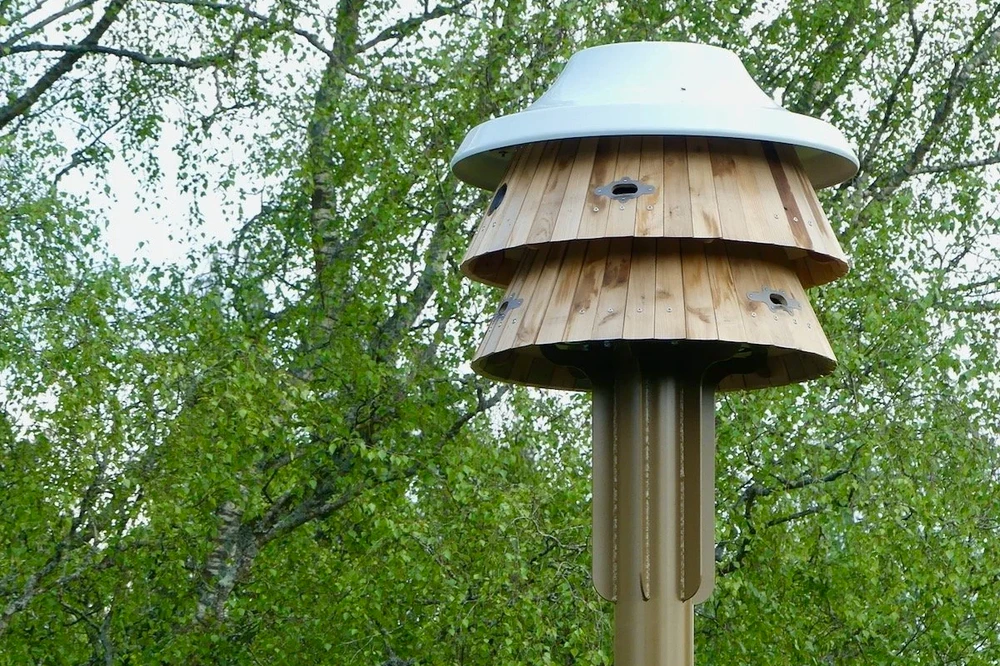
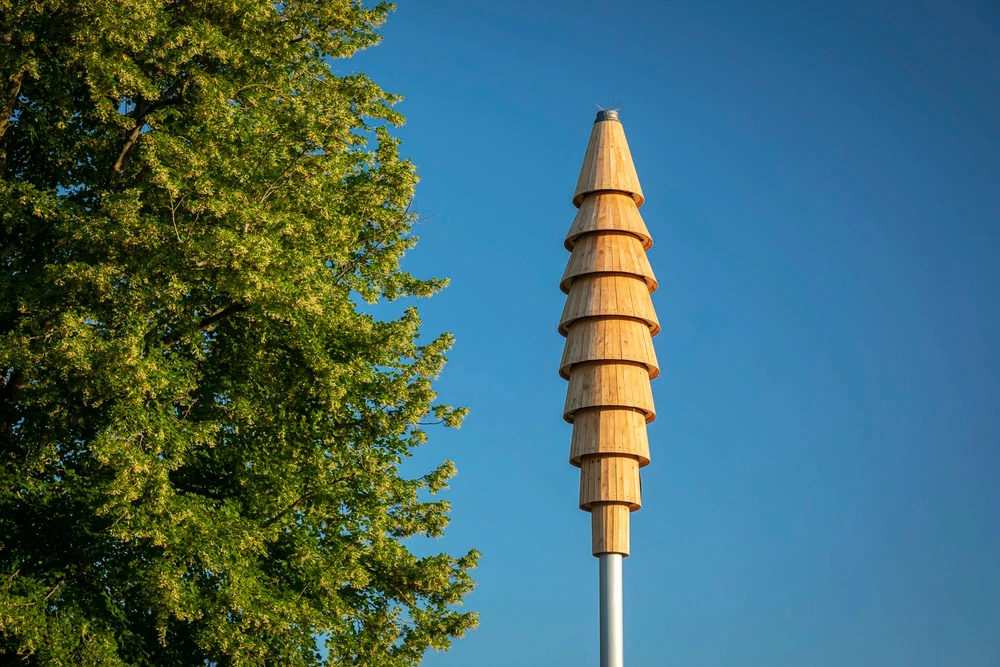
GreenHeal is fundraising for a Swift tower
Last year, we installed 47 Swift boxes in local homes and St Mary’s Church in Cowdray. We’re now aiming to expand our Swift outreach programme with a tower in Easebourne Park.
What is a Swift tower?
A Swift tower is a tall pole housing a large collection of nesting boxes. This provides safe and secure homes for multiple pairs of swifts, a species threatened by depleted nesting areas. Swifts nest in barns, wall crevices, and old structures, but these are rapidly disappearing as old buildings are demolished or repaired.
The UK Swift population has plummeted by around 75% and is now endangered. Without our help, these valuable birds will likely vanish from our skies.
We are looking for grants, gifts and donations for £7,500 to purchase and install a swift tower.
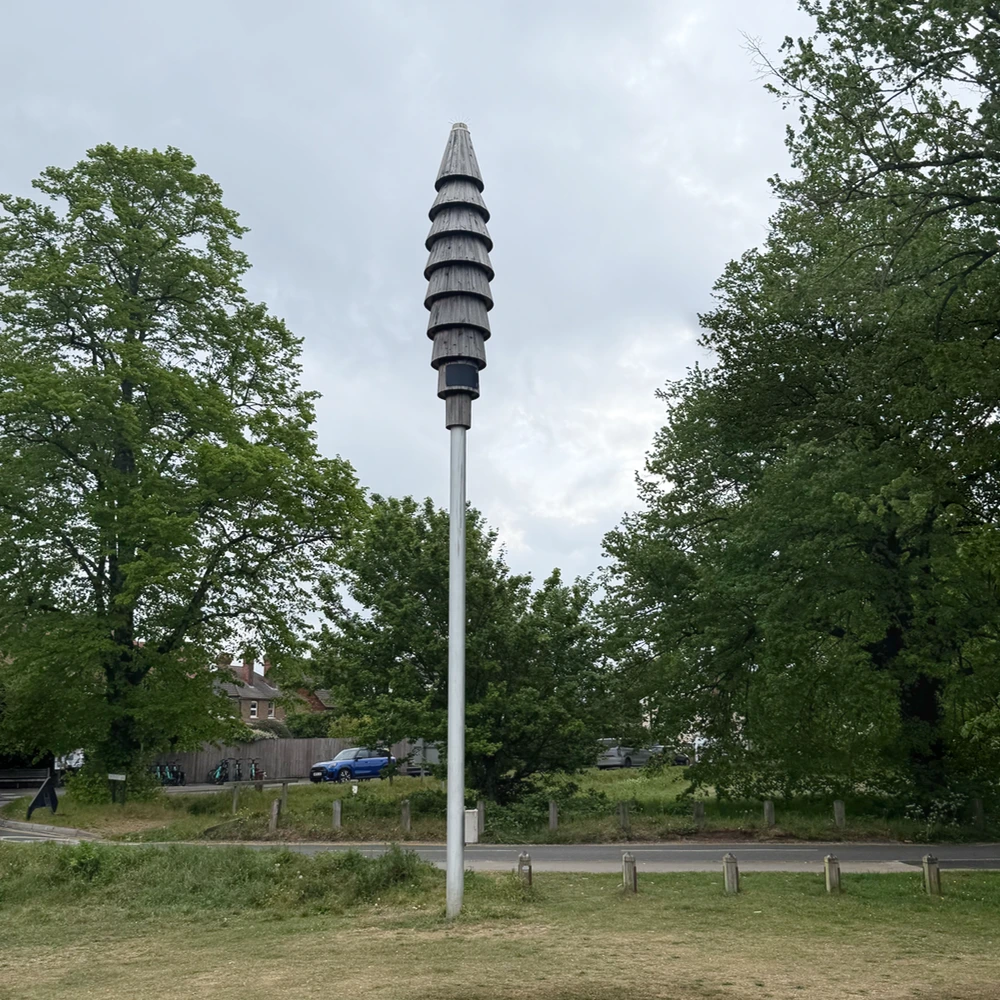
This shows a Swift Tower that was installed in Salford near Guildford a few years ago.
Life on the wing
These incredible birds spend their entire lives in the air, eating, sleeping, mating, and flying thousands of miles without landing. This includes their incredible hibernation flight from Africa to the UK, over 5,000 km. Tired upon arrival, they need a home to thrive as a species.
Midhurst and surrounding areas like Tillington, Lodsworth, and Easebourne once had substantial Swift populations but these have now largely disappeared.
Swifts mate for life and are deeply faithful to their nest holes, so they can be difficult to attract into new nest boxes. The chances are better if Swifts are already nesting in the vicinity. Time and patience are needed; success may well not come in the first or even second year.
Swift Facts
Swifts spend the winter in Africa but travel to Britain every year in April and May.
Swifts feast on small flying insects caught on the wing. Insects collect in a special pouch at the back of the swift’s throat, where they are bound together by saliva until they form a kind of pellet known as a bolus, which can be regurgitated and fed to chicks. One single bolus can contain over 300 insects.
Up in the air
The swifts you may see in spring have been flying without cease ever since the moment they launched into the air from the safe, dark nest in which they hatched. From there, they straightaway headed south for Africa: snapping up airborne insects, sipping water from lakes on the wing, preening their feathers in elegant aerial manoeuvres, and spiralling up into the sky at dusk to sleep and orient themselves. Flying is simply what a swift does, all of the time, unless grounded by misfortune— most likely in the shape of persistent, torrential rain. However, their return to the part of the world in which they hatched is purposeful.
They come to seek a nest and a mate, and to establish their place within the loose, colonial territories that swifts form during the breeding season. Finding a nesting hole takes time, but they have an instinct for suitable places and are often attracted by calls from their own kind. Swifts prefer to nest high up, under the eaves of buildings or in crevices in the masonry, searching for an entrance hole to a hidden space where they can make their dish-like nest of feathers, tree seeds, and other materials blown up into the air and glued together with saliva.
How to identify a Swift
They are easy to spot as they look like an arrow whirling through the sky, and often fly in groups.
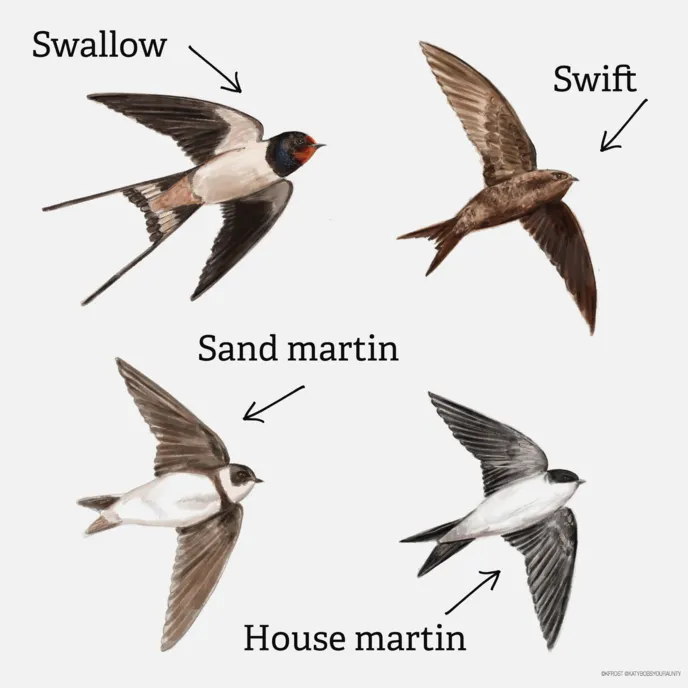
The swift is dark brown all over, often appearing black against the sky, with a small, pale patch on its throat. They’re larger than swallows and martins, with long, curving wings that make them look a bit like a boomerang when in the air. Swifts are very sociable and can often be spotted in groups wheeling over roofs and calling to each other with high-pitched screams. Unlike swallows and martins, swifts are almost never seen perching.
Key features to tell a swift from a swallow or martin are the dark underside (swallows and martins have pale bellies), the proportionately longer wings, and the screaming call.
How can I help?
We are looking for donations to help bring this project to life. You can donate now via our regular programme or a direct payment to GreenHeal or via our Just Giving Page.