
By Isaac Olson, Nursery Near Me
Once a bare-root apple, pear, plum or cherry is planted and tied to its stake, the hard part looks finished. But the first twelve months are important for helping it settle. This sequel to our Care Guide for Fruit Trees covers what comes next for a tree planted during the English winter.
Watering through the first spring and summer
Water well at planting, then check the soil during dry spells, even in winter. Once the buds break, a young tree needs more attention. Bare-root trees lose fine roots when lifted, so they cannot reach far for moisture in their first growing season.
In dry weather, around two full watering cans — roughly 20 litres — once a week can be a useful starting point. Pour slowly over the root area so the water soaks in. Adjust the amount and frequency to the weather, soil and size of the tree: a thorough soaking is better than a daily splash.
Check the soil about 10cm down beside the roots, taking care not to damage them. If it is cool and slightly damp, leave it; if dry, water. Sandy soil dries faster than clay. On heavy soil, watch for waterlogging rather than following a fixed watering schedule.
Mulch and a grass-free circle
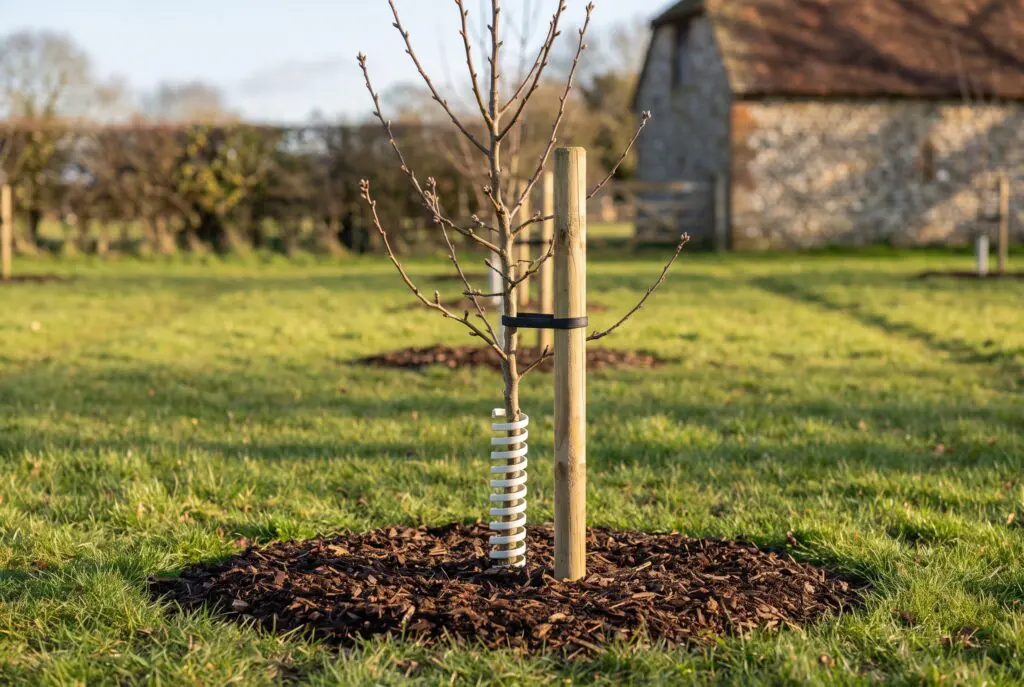
Grass competes with a young tree for water and nutrients. Keep a circle about a metre across free of grass and weeds for at least the first three years. Cover it with 5–8cm of well-rotted compost, leaf mould or composted bark.
Mulch helps hold moisture and suppress weeds. Leave a hand’s width clear around the trunk: mulch piled against bark can encourage rot. Top it up each spring, and check the soil beneath it before watering.
Stakes, ties and guards
A trunk thickens as it grows, and a tight tie can bite into the bark. Check ties every couple of months and after strong winds, adjusting them so they support the tree without rubbing or constricting it.
How long a stake stays depends on the rootstock and exposure. Some trees need support for several years; many dwarfing rootstocks need permanent support. Check the nursery’s advice before removing it.
Rabbits can strip a young trunk, especially in winter. A suitable spiral guard or wire-mesh sleeve helps protect it. Check guards regularly so they do not trap weeds or become too tight. Where deer visit, use a sturdy protective cage tall enough for the local deer.
Formative pruning: shape carefully
Formative pruning builds a strong framework during the first few years. The method depends on the fruit, the tree’s age and the shape you want. Young bush or half-standard apples and pears are normally pruned while dormant, between leaf fall and bud break; initial shaping may be needed straight after winter planting.
The aim is a few well-spaced main branches and an open crown. Avoid applying the same cuts to every tree: an unbranched maiden needs different treatment from a partly trained tree, and cordons and espaliers need their own approach. Ask your nursery if unsure.
Plums and cherries need different timing: prune young trees in spring or early summer, rather than winter, to reduce disease risks. Avoid unnecessary summer trimming of newly planted apples and pears; their leaves help feed establishing roots.
Remove the first fruitlets
A young tree may set fruit in its first spring. Remove the fruitlets so it can concentrate on roots and a strong framework. In the second year, allow just one or two fruits only if the tree is growing well; a weak tree benefits from another season without a crop.
Signs that a tree is struggling
Watch for small, pale leaves, scorched edges, midsummer leaf drop or very little shoot growth. Newly planted trees can be slow to leaf out, but buds still unopened by early June deserve a closer look.
Dry soil and waterlogging can cause similar symptoms, so check before watering. A tiny scratch on a shoot showing green beneath the bark indicates living tissue, but does not explain the cause of poor growth. If problems persist, ask your nursery for advice.
For further reading, Nursery Near Me’s Fruit Trees for Every Season: Planting Tips and Tricks discusses fruit-tree choices. It is an Australian guide, so adapt seasonal advice and variety choices to UK conditions.
About the author
Isaac Olson is the director of Nursery Near Me, an online nursery in Australia that publishes free plant-care guides.
This guest article has been edited for GreenHeal’s UK readers.